
Every dog owner has been there: a sudden thunderstorm rolls in, a firework goes off, or a guest walks through the door, and suddenly your calm companion transforms into a pacing, whining, or hyperactive ball of anxiety.
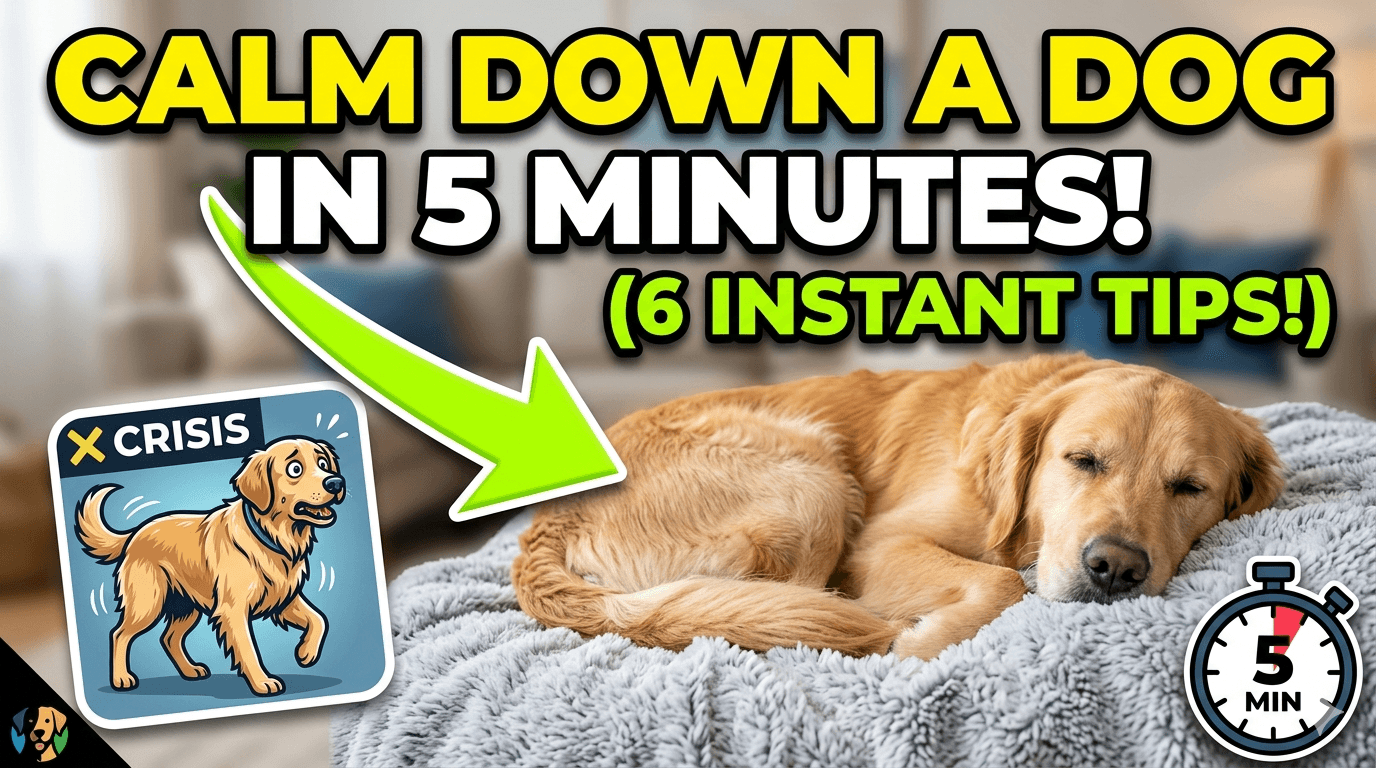
When your dog is in a state of high stress or over-excitation, you need solutions that work fast. Dogs live in the present moment, meaning your immediate actions can drastically alter their emotional state. Here is a step-by-step guide on how to calm down a dog quickly and safely.
1. Create an Instant “Safe Haven”
When a dog is overwhelmed, their instinct is often to find a den. If they are pacing or looking for a place to hide, guide them to a quiet, dim room away from the commotion.
- The Setup: Close the curtains, turn off the TV, and bring them to their crate (if they are crate-trained and view it as a positive space) or a small room like a bedroom or bathroom.
- Add Comfort: Toss in a blanket or an article of your clothing. Your scent is a powerful natural anchor that signals safety to their brain.
2. Lower Your Own Energy (The Mirror Effect)
Dogs are incredibly intuitive animals that feed off human body language and heart rates. If you yell, rush around frantically, or stressfully repeat “It’s okay, it’s okay!” in a high-pitched voice, your dog interprets your anxiety as confirmation that there is indeed something to fear.
- The Fix: Take deep breaths, lower your posture, and speak in a low, slow, soothing monotone. Act as though absolutely nothing unusual is happening. Your calm confidence tells them, “I’m leading the pack, and I’m not worried, so you don’t need to be either.”
3. Use the “Long, Slow Stroke” Technique
Frantic, rapid patting will only excite or stress a dog further. Instead, use a specific tactile grounding technique.
- How to do it: Place your flat hand on the top of your dog’s head and, using gentle but firm pressure, stroke slowly all the way down their spine to the base of their tail.
- Why it works: This continuous, slow physical contact mimics the soothing grooming behaviors of a mother dog and can actively lower a dog’s heart rate. Avoid holding them too tightly or pinning them down, which can trigger a fight-or-flight panic.
4. Engage Their Nose (The Best De-escalation Tool)
A dog’s sense of smell is their primary window into the world, and sniffing actually has a measurable physiological calming effect on their canine brain. It shifts their focus from a “reactive” state to an “analytical” state.
- The Trick: Scatter a handful of high-value treats or kibble across the floor, or drop them into a rolled-up towel. Forcing them to drop their head and sniff out the treats instantly distracts them from the stressor and burns up anxious mental energy.
5. Give Them Something to Lick or Chew
Licking and chewing release endorphins (feel-good hormones) in a dog’s brain, acting as a natural sedative.
- The Fast Fix: Keep a hollow rubber toy (like a KONG) or a silicone licking mat ready in your freezer smeared with dog-safe peanut butter, plain Greek yogurt, or wet food. The cold texture combined with the repetitive licking motion acts as an incredible tool to lower their cortisol levels within minutes.
6. Mask the Noise with Sound Therapy
If the trigger is external—like construction, thunderstorms, loud traffic, or neighborhood commotion—you need to drown it out immediately.
- What to play: Avoid standard radio or high-tempo music. Instead, look up “Classical Music for Dogs” or “White Noise for Dogs” on YouTube or Spotify. Research shows that soft classical music and reggae are highly effective at reducing stress behaviors in kenneled and anxious dogs.
What Not to Do
- Never punish an anxious dog: Whining, barking, pacing, or accidental urination are involuntary physical responses to fear or overstimulation. Punishing them will only compound their terror.
- Don’t force socialization: If your dog is over-excited or fearful of a visitor or another animal, do not force them to interact. Give them space to decompress first.
When to Seek Long-Term Help
While these quick-fix tips are perfect for situational stress, a dog experiencing chronic separation anxiety, severe noise phobias, or generalized anxiety may need a structured behavior modification plan. If your pup frequently enters a state of panic, consult a certified positive-reinforcement canine behaviorist or your veterinarian to discuss specialized training, calming supplements, or pheromone diffusers.
By staying calm, shifting their focus, and changing their environment, you can successfully guide your dog back to a state of peace and safety.

I am a pet expert dealing with Cats, Dogs, Birds, Rabbits and Aquarium fish for the last 10 years. Now it is time to share my knowledge with you. I am very passionate about sharing everything that I learned so far about pet care. Watch my Youtube channel Petfather